

October 30, 2026
Skyports Defence: turning drone investment into operational capability
Lewis Dickinson, Head of Defence, Skyports Drone Services
Buying the aircraft is only the first step. Defence’s harder challenge is turning a fast-changing mix of platforms, sensors and data into capability that is secure, interoperable, supportable and ready to use.
Recent conflicts have shown how quickly drone platforms, tactics and countermeasures can evolve. That creates a challenge for defence organisations whose procurement, training and support models were designed around much slower technology cycles.
In June 2026, the UK Government committed more than £5bn over four years to the Armed Forces’ drone transformation through the Defence Investment Plan. The opportunity is significant, but investment will only translate into capability if the operating model around each system is designed, funded and sustained with it.
Take a surveillance task. An aircraft may meet the range and payload requirement, but it is not yet an operational capability. A trained team must deploy it, its data must reach an approved system, it must be supported, and the customer must know who can act on its findings. Those activities determine whether it moves beyond a trial.
Making a drone operational
A successful demonstration shows that an aircraft can fly and complete a defined task. It does not show that an operational unit can deploy it repeatedly, connect its data to approved systems, keep it working through disruption or sustain it as equipment and suppliers change.
Start with the mission. Define what the user must achieve, where the data goes and who can act on it. Then select and test the aircraft, payload and communications before training the team and putting support in place.
Most programmes depend on several specialist suppliers. The challenge is making their products, data and support arrangements work as one service around the mission.
Skyports Defence: Enable, Fly, Detect & Protect
Skyports works between technology suppliers and the user, either directly or within a prime-led programme. We integrate and test selected systems, prepare approval evidence, train teams, operate missions and support the service. Overall system authority, military acceptance, command decisions and countermeasure authority remain with the customer, prime or designated authority.
The support we can offer to defence organisations falls into three areas:
- Enable:
Enable is where a promising system meets reality. The test is whether a unit can plan, deploy and recover it, use the data and keep it serviceable in difficult conditions. The output is a tested operating concept, trained users, a support plan and evidence for the customer’s approval decision.
Training cannot stop at the controls. It must cover deployment, recovery and continuing competence. Testing must show whether the system connects to approved systems, how it responds when communications or other dependencies fail, and what users can maintain themselves.
During a military medical logistics exercise in Kenya, Skyports established the operating and approval arrangements, trained personnel to receive an automated delivery drone and completed 64 return missions with simulated medical supplies. As the exercise progressed, trained teams began using the service without prompting. That mattered more than the flight count alone because it showed a practical role in the exercise. The work also exposed issues around connectivity, landing sites, ruggedisation and serviceability. Enable uses those lessons to define what must change in the technology, operating model and support arrangements before fielding.
- Fly:
Fly is about delivering an operational output, not handing over an aircraft.
For Defence, that output can be surveillance data and imagery or supplies delivered where they are needed. Both depend on trained crews, approvals, maintenance, communications and a clear route into the customer’s command or logistics systems.
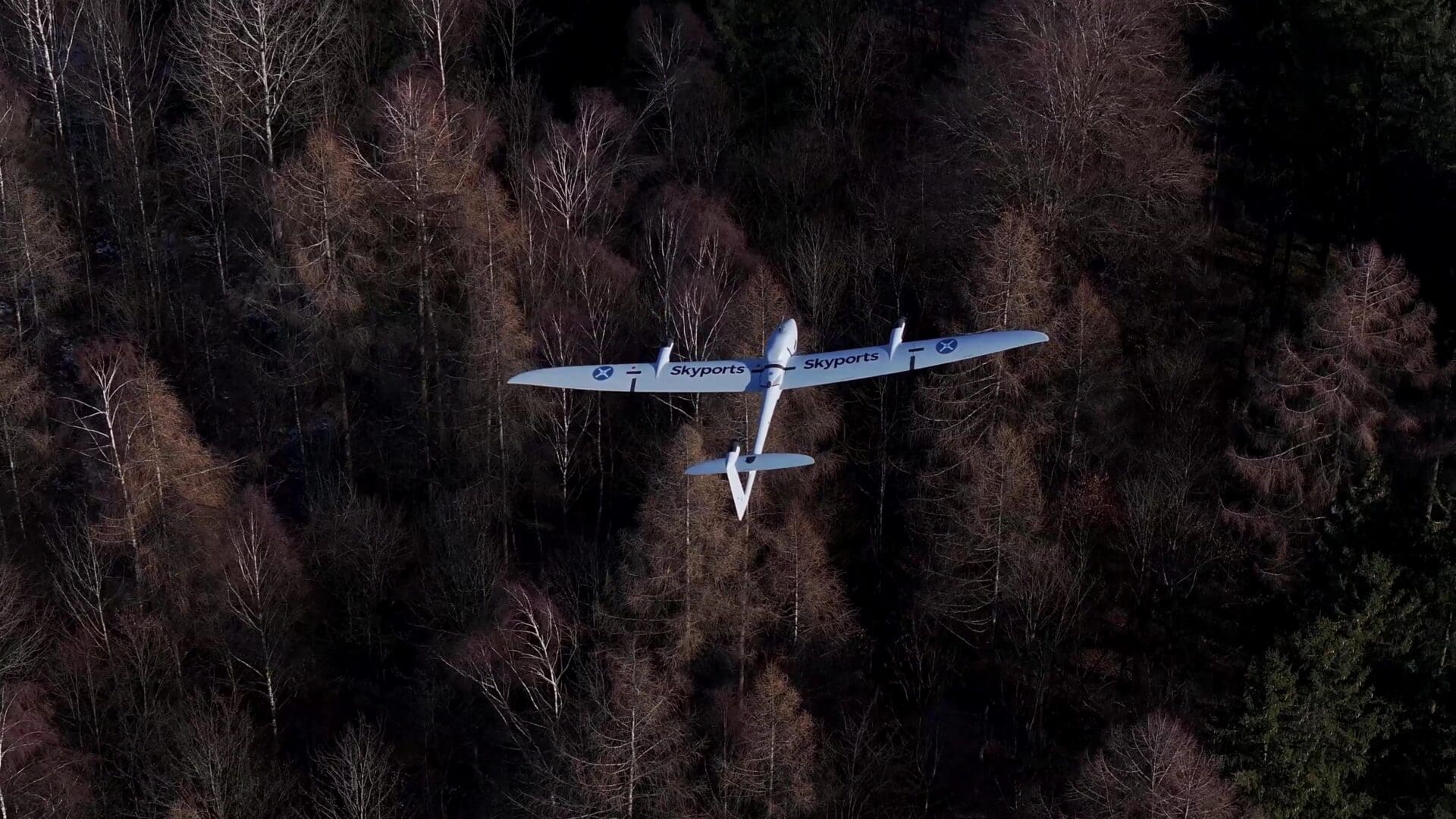
Through Overwatch, delivered in partnership with Quantum Systems, Skyports combines aircraft and sensors with regulatory approvals, remote flight operations and mission delivery. Success is not airtime. It is useful information reaching the customer’s authorised users in time to inform a decision.
Skyports has integrated drone delivery into Royal Mail’s postal service in Orkney and medical operations in Belgium and the Democratic Republic of the Congo. In Belgium, aircraft carrying medical cargo between hospitals were flown by Skyports remote pilots from our operations centre in Buckinghamshire. Making that work meant live flight and airspace information reaching the remote crew, clear loading and handover procedures for local teams, and support for the aircraft at each site. That is relevant to distributed resupply, where one operations centre may support several locations. Defence-specific assurance, security and command decisions would still remain with the customer.
- Detect & Protect:
A drone appears over a depot. Is it lost, gathering intelligence, testing the site’s response or carrying something dangerous? A sensor alert cannot answer that question on its own, and an alert is not protection. The Ministry of Defence reported 266 UAV incidents near UK Defence sites in 2025, up from 126 in 2024. The task is to keep the site operating while the threat is detected, understood and dealt with.
Protection starts with the asset, likely threat and consequence of disruption. The system must then detect and track an incursion, verify what is happening, feed a trusted picture into existing security and command systems, and support a lawful, rehearsed response. No single sensor suits every site, so the architecture must combine technologies and change as the threat changes.
Skyports’ work for the Maritime and Port Authority of Singapore (MPA) shows the operating layer in practice. From one operations centre, Skyports pilots remotely operate drones from three waterfront locations for routine surveillance and incident tasking. When they spot a safety or environmental concern, they alert MPA’s enforcement team and provide the live view it needs to respond.
MPA is not a counter-UAS service, but the operating lesson carries across. Remote monitoring only creates value when the operator and the customer’s response team work as one system. Defence could build on the same model by integrating specialist sensors and authorised countermeasures, while the customer retains response authority.
Why Skyports
Across all three areas, Skyports starts with the mission, integrates the service and uses operational evidence to improve it as the requirement changes.
These examples are a starting point, not proof that civilian services can simply be transferred into Defence. Each requirement still needs military assurance, security, resilience, trusted supply chains and integration into customer systems, with specialist partners where needed. What we bring is practical experience of solving the delivery problems around the aircraft.
As Defence expands its use of drones, success should not be counted in systems bought. It should be counted in systems that units can connect, deploy, support and adapt when they are needed. The aircraft and the service around it must be specified and funded together.
If you want to explore how Skyports could help turn a drone requirement into repeatable operational capability, contact me at le*************@******ts.net.
Find out more about Skyports Defence here: Defence | Skyports Drone Services