
March 17, 2026
Meet the Team: Ricky Bhargava, Director of Safety and Regulation
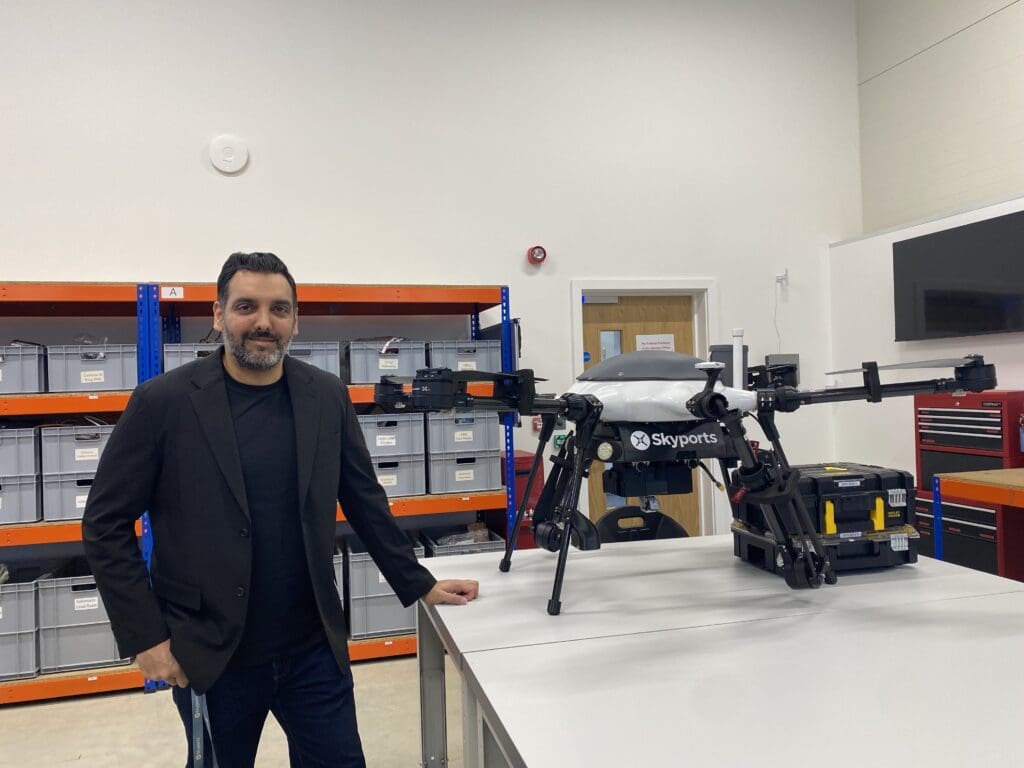
There’s a lot that happens behind the scenes to get our drones in the air.
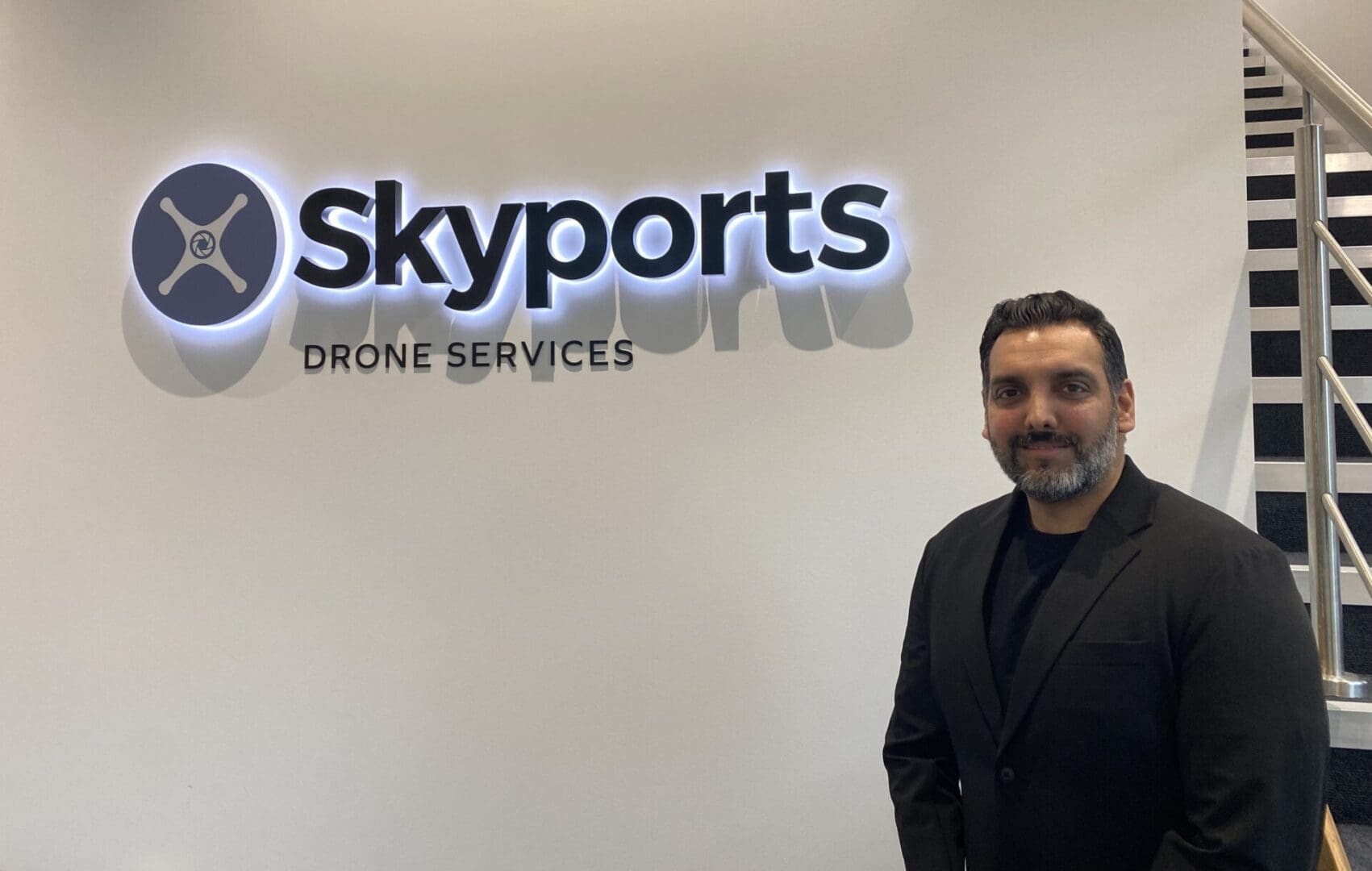
One of the most critical pieces of the puzzle is getting the right regulatory approvals and ensuring that we have top safety frameworks in place. We catch up with Skyports’ Director of Safety & Regulation, Ricky Bhargava, to hear how he applies his safety experience from crewed aviation to our operations, how the regulatory landscape has evolved in the last five years, and what more needs to be done from a regulatory standpoint to unlock the full potential of drones.
Talk us through what you handle as Director of Safety and Regulation.
My main focus is securing the complex regulatory approvals we need around the world to conduct beyond visual line of sight (BVLOS) operations. Once those approvals are in place, I make sure we operate under a strong safety management system — one that’s built on the just culture we’ve worked hard to embed across the company.
While BVLOS is very much the “gold standard” we’re working towards, our approach isn’t “BVLOS at all costs”. It’s about choosing the right type of operation for the risk and the environment. Sometimes that might mean BVLOS with visual observers, and other times it might simply be with visual line of sight if that’s the safer and more appropriate option.
You have a pretty cool side hustle as an airline pilot. How does that influence the way you approach things?
I’ve now been flying commercially for almost 20 years. The first decade was mostly short-haul around the UK and Europe, and the last decade has been long-haul — to the US, South Africa, Asia — so I’ve had a decent mix of experience.
Traditional aviation has built an incredibly strong safety culture — open reporting, just culture, global regulatory harmonisation — and it’s the safest form of transport as a result. A big part of my strategy is bringing that same mindset into the drone world: embedding those standards, sharing what I’ve learned, and encouraging harmonisation between regulators. When it comes to drones you see very different approaches globally, and we’re actively working with regulators to help shape frameworks that maintain the highest possible safety standards.
How do you think we do things differently when it comes to Regs and Safety?
What really sets us apart at Skyports is that we combine speed with discipline.
We operate in an industry that’s evolving incredibly quickly, and we’ve been very good at moving with it — identifying the right systems, staying agile, and adapting to different technologies and customer needs.
But crucially, that speed never comes at the expense of safety. Safety is always the first priority. If there’s a safety occurrence, everything stops. We do a proper deep dive, bring in all the relevant departments, and only resume operations once everyone is aligned and confident. It’s a very pragmatic but robust approach.
So ultimately, it’s that balance. We move fast, we stay adaptable, but we’re uncompromising on safety.
What’s been your favourite project?
For me, the most rewarding projects have been the ones where you can see a clear social benefit — where drones are genuinely making a difference to people’s lives.
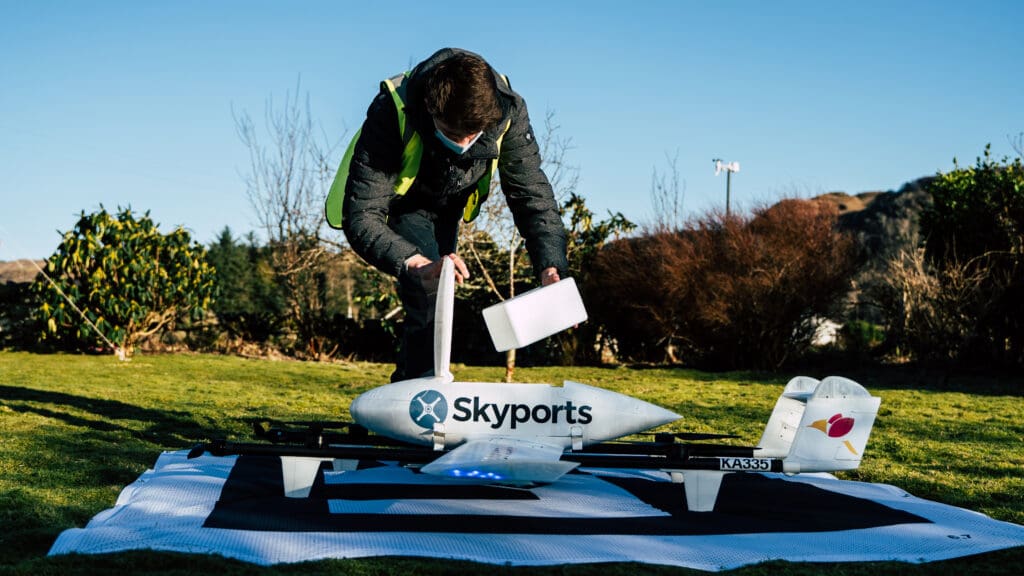
One that really stands out was during the pandemic, when we worked closely with the NHS to transport COVID samples to hard-to-reach locations in Scotland. Traditionally, getting those samples analysed could take three or four days. With drones, we were able to move them the same day. That meant people could get results faster, isolate sooner if needed, and protect their families and communities much more quickly.
The impact was immediate and measurable. From an airspace integration perspective it was complex and challenging, but incredibly fulfilling — because you could see, in real time, how the technology was helping in a national crisis. That’s the kind of work I’m most passionate about.
You’ve been at Skyports for 5+ years – how has the regulatory environment for drones changed?
It’s definitely been a journey — and at times, a frustrating one.
When I first joined, the regulatory environment felt pretty rigid. Dialogue could be pretty challenging.
That hasn’t completely changed, but what has evolved significantly is the level of engagement from regulators. Over the past year in particular, we’ve seen a real shift. We’re now speaking directly with regulators before we even submit applications, sense-checking proposals, and having open conversations about what we’re trying to achieve.
Encouragingly, regulators are starting to adapt too. They’re evolving guidance, updating versions of regulation, and clearly taking operator feedback into account. There’s a growing recognition that drones are here to stay.
So while progress was slow for a number of years, the last 12 months have felt much more positive. The tone has shifted toward partnership, and I’d love to see that continued collaboration as the regulatory landscape keeps developing.
What still needs to be done for drones to deliver their full potential?
I think the big piece that still needs unlocking is the safe integration of drones into uncontrolled, Class G airspace — particularly in the UK.
We’ve been talking about it for years, and while there has been progress, it’s still slow. BVLOS is really the key to unlocking scale, and at the moment we’re often able to move faster in other countries than we are at home. The Atypical Air Environment policy was definitely a step in the right direction, and we’re actively contributing to how that evolves — but it’s not yet where it needs to be.
There also needs to be greater trust placed in experienced operators, allowing them more freedom to self-authorise operations up to a defined risk level – similar to the privileges offered through a Light UAS Operator Certificate (LUC). That kind of framework would enable capable operators to move faster while maintaining strong safety standards. It would also significantly reduce the burden on the CAA by shifting routine operational approvals away from the regulator.
Where do you think drones still have the most to offer?
The biggest untapped potential sits in the verticals we’re already working in — surveillance, inspection and remote delivery — but the real constraint right now is BVLOS.
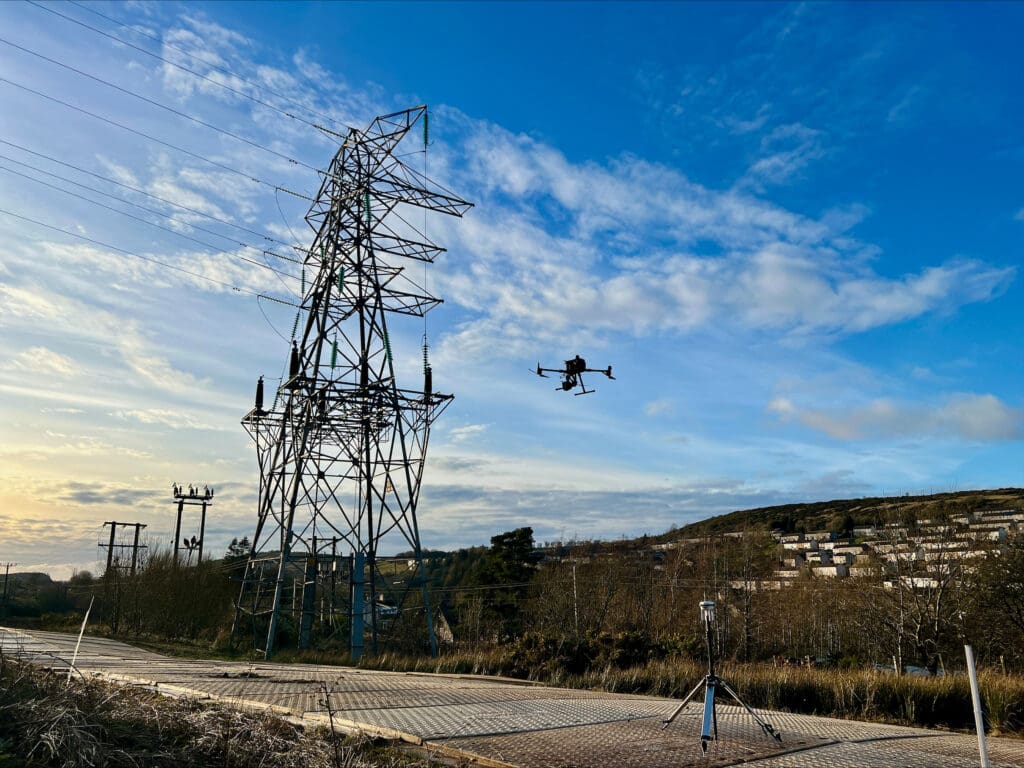
If we can truly unlock BVLOS at scale, the existing value multiplies. Take infrastructure inspection, for example. Being able to fly hundreds of miles of power lines in one continuous operation, rather than being limited to a fixed location, massively improves efficiency and reduces costs. That’s huge for customers. If we can demonstrate why certain environments are safe for that next step, we can really scale our services.
So really, the potential is already visible. The use cases are proven. What unlocks the next level — across virtually every industry — is solving the BVLOS question in a pragmatic, risk-based way. Once that happens, the benefits will extend well beyond any single sector.