
May 21, 2026
Meet the Team: Cheska Rojas, Project Manager
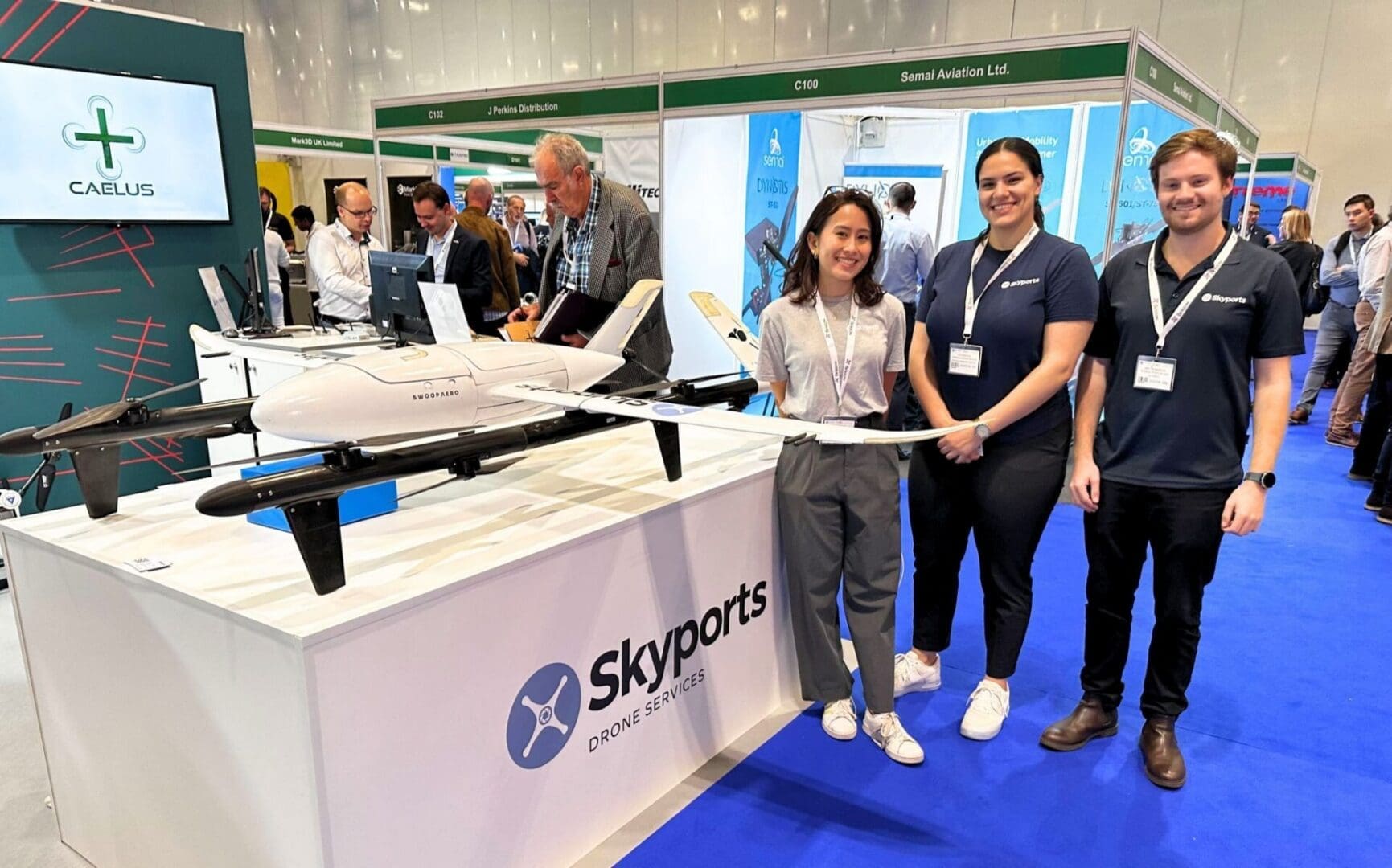
To deliver the best service we can, our Projects team are critical for acting as the touchpoint between our customers and our flight operations teams. Here, we catch up with Cheska Rojas, one of our Project Managers, to get a deep dive on the role of a PM, with some top tips for customers on how they can help guarantee the success of their drone operations from the start
So you’re a Project Manager – how does that fit into what we do here at Skyports?
In the Projects team we’re effectively the bridge between our clients and the internal team, making sure we deliver on what we’ve promised and keeping everyone aligned. A big part of the role is communication — coordinating between clients, end users, project partners and the wider Skyports team to make sure expectations, timelines and outcomes are clear.
My day to day is pretty varied. Some projects involve helping clients who are new to drones understand what problem they’re actually trying to solve, and how drones might be able to do it. Other times it’s about managing changes, resolving challenges, or keeping projects on track against key milestones and deliverables. Ultimately, it’s about making sure projects run smoothly whilst creating long-term value for both the client and Skyports.
What’s been your favourite project at Skyports?
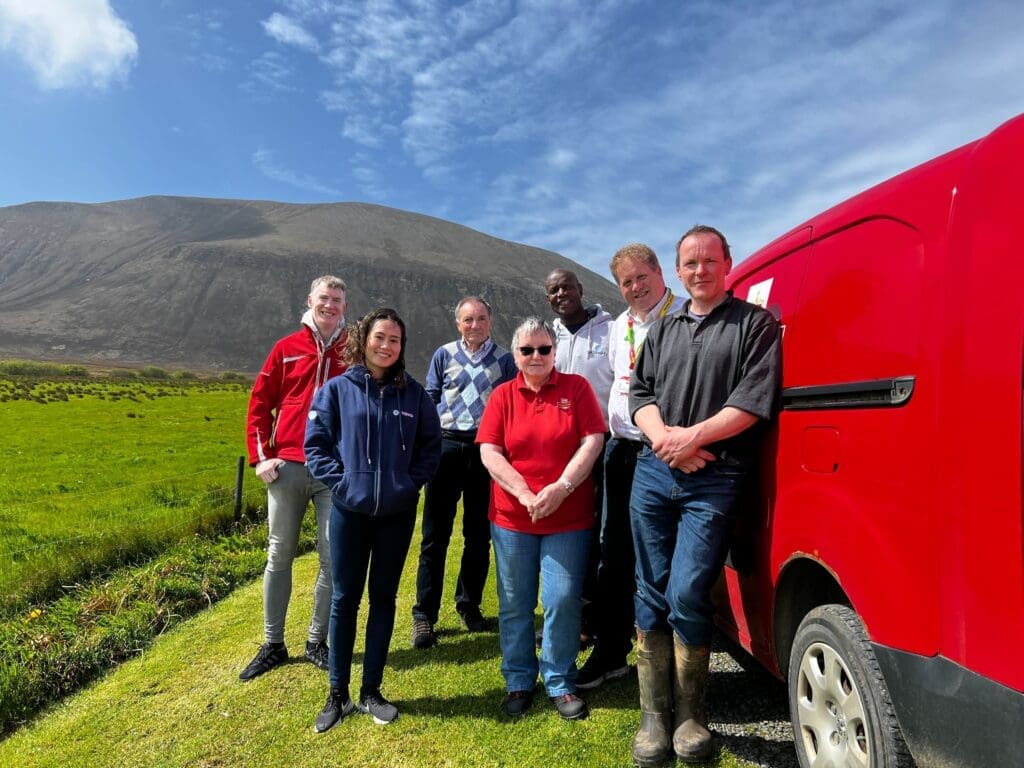
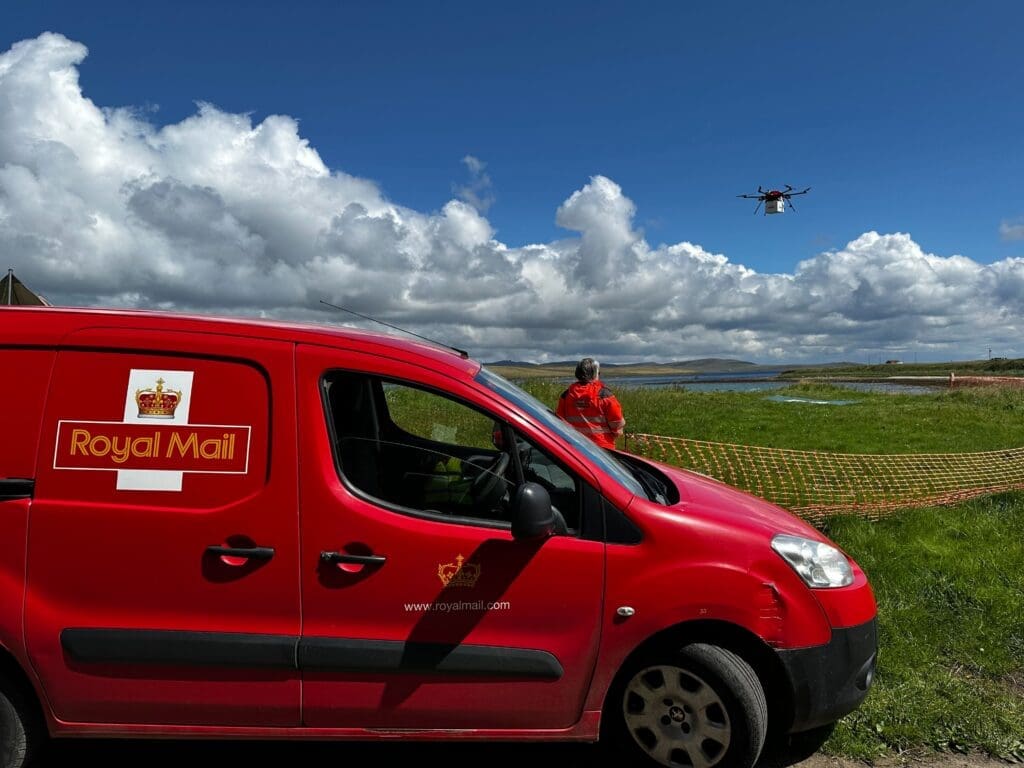
It has to be the Royal Mail project in Orkney, mainly because it was the very first project I worked on, and is still going strength to strength three years later. I’ve seen it evolve from an initial proof of concept into something that’s genuinely becoming part of the local logistics network.
It’s been especially interesting learning how the wider Royal Mail system works — from mail entering Scotland through Glasgow all the way to deliveries reaching homes across Orkney. It’s also involved a lot of local engagement, which has made the project feel very connected to the community. Over time, I’ve really been able to see the positive impact the drone operations are having, not just for residents, but also for Royal Mail employees. It’s been cool seeing the project create jobs, and hearing local people asking for the service to continue.
What was your personal career journey that led you here?
My career into Skyports was definitely not a straight line! I originally came from a finance background, working in asset management in the Philippines, but after a while I wanted to see what working in a more developed financial market would be like. I moved to the UK to study a Master’s in Finance, thinking being in London, the largest financial centre, might give me a better perspective.
But during that time, I became much more interested in how quickly technology was shaping industries. That pushed me to take a second Master’s in Computer Science, designed for people transitioning into tech from other backgrounds. Around the same time, post COVID, I developed a side project creating a home delivery box for receiving packages, as so many people were struggling to receive packages while returning to offices. This project really got me into delivery and logistics.
This role came up at Skyports and it really felt like the coming together of my key interest areas.
You’ve been at Skyports for 3 years now – how has the drone sector has changed in that time?
The drone sector has shifted from “proving the technology works” to scaling into real, everyday operations. When I first joined Skyports, a lot of projects were still very demonstration-focused — showing clients, regulators and the public that drones were safe and they worked.
Now, the conversations are much more about long-term value. Companies are actively looking at drones as part of their day-to-day operations, especially in sectors like utilities and logistics.
In tandem regulators have become much more collaborative. Even when there isn’t an existing regulatory framework for a specific operation, they’re increasingly willing to work with us to shape these rules together. Public acceptance has evolved too — there’s a much better understanding of the practical benefits of drones.
How is technology — such as Remote Operations and AI — changing the way our projects run?
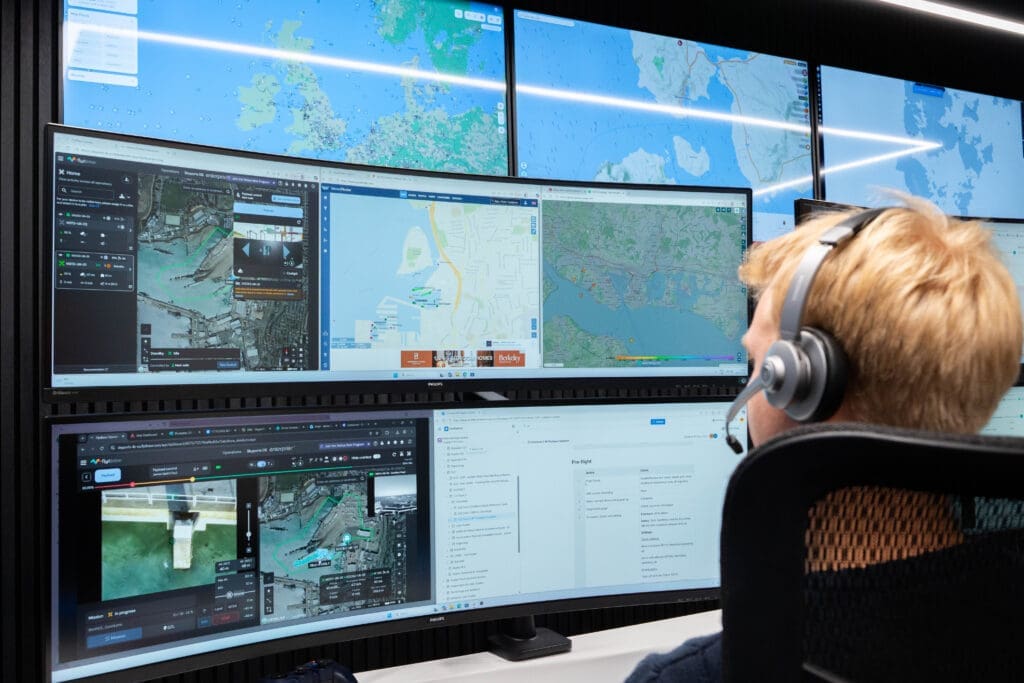
Remote Operations have been a real gamechanger in unlocking flexibility and scalability. It means our pilots no longer need to be physically located where the drone is flying. For example, we can operate separate flights in Scotland and Belgium, with the same pilot based at our Global Operations Hub in Westcott. This allows us to expand operations without being limited by local resourcing, while also giving clients a more flexible service.
AI has also become increasingly valuable. It’s helping streamline repetitive tasks, speed up data analysis and improve decision-making, especially when dealing with large amounts of data. As projects become more complex and scale up, AI helps us work more efficiently and focus more time on strategic problem-solving rather than manual processes.
You’ve probably seen a fair few projects through from start to finish during your time. For anyone who might be new to the drone world, what would be your advice to ensuring projects run as smoothly as possible?
Start stakeholder engagement as early as possible. Successful drone projects involve far more people than just the drone operator and the client — you also need to bring regulators, local authorities and communities into the conversation early on.
Regulatory approvals can take time, especially if you’re doing something different, so engaging with regulators early helps avoid delays later in the process. The same applies to councils, landowners or other local groups who may be impacted by the project. Even if the technology is safe and proven, people will naturally have questions or concerns, particularly if they’re unfamiliar with drones.
The smoother projects tend to be the ones where communication is proactive and transparent from the start. Taking the time to explain the purpose, benefits and safety measures early on helps build trust and keeps everyone aligned.
What excites you the most about the direction the drone sector is heading?
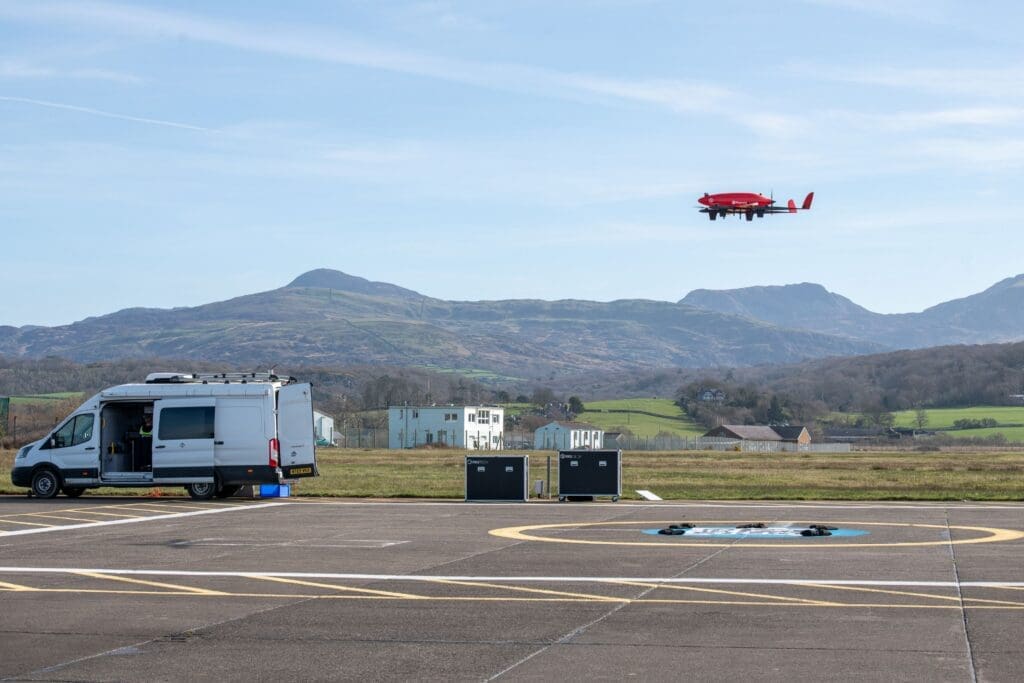
It’s exciting to see how quickly drones are moving into real-world adoption across different industries. We already see strong use cases in areas like medical deliveries and logistics, but it’ll be fascinating to see which sectors become the biggest long-term adopters.
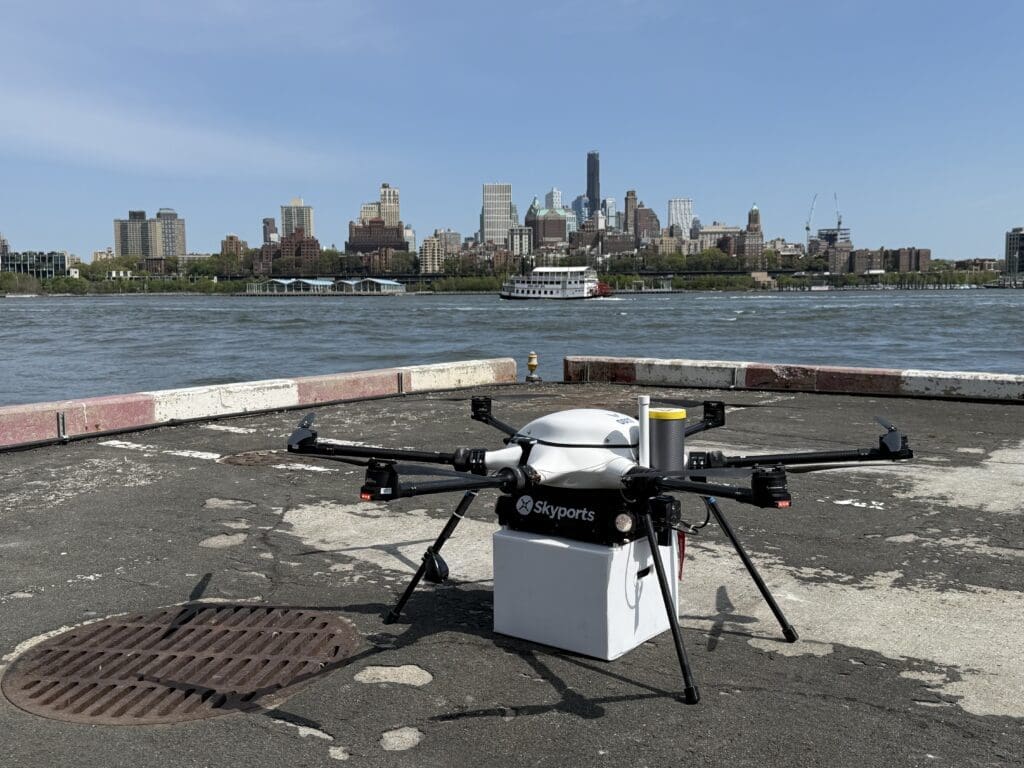
It’s also cool to see how far regulations have progressed in such a short time. A few years ago, most people would have said operating drones in a place like New York, alongside helicopters and in a dense urban airspace, would be impossible. Now, regulators like the FAA are actively working with us to make this service possible. That shift opens the door to much bigger opportunities in the future — whether that’s routine hospital-to-hospital deliveries or wider urban logistics.
Drones are incredibly versatile pieces of technology, and there’s definitely so much more they’re capable of.